Design
Weak Cards Are Good For Your Cube
Last week, my friend Maggie asked the group chat to weigh in on a potential cube swap: Man-o'-War replacing Skaab Ruinator. At a first glance, the choice seemed straightforward. In a list like Maggie’s Twilight, which is brimming with the greatest hits of 2003-2015, the jellyfish is undoubtedly more powerful than the zombie.
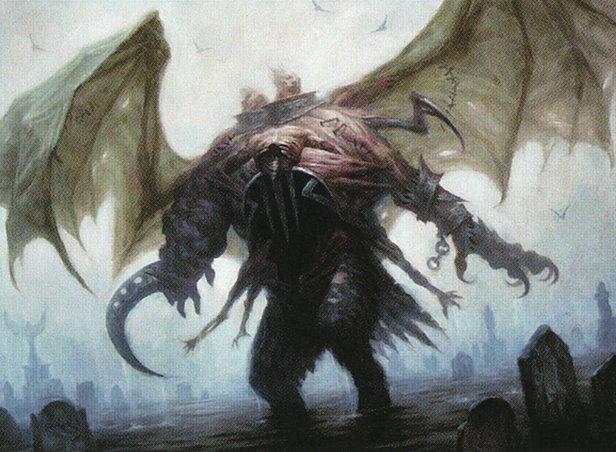
But power alone doesn’t justify a card’s cube inclusion. In fact, the more I thought about it, the more I was convinced that Skaab Ruinator earned its slot in Twilight, and was in fact the poster child for the advantages of weak cube cards. Weak cards are amazing cube design tools, but to realize those benefits, we must recognize the moments when power-level upgrades are self-defeating.
An Overton Window 23 Playables Wide
Most Cube deckbuilds involve a pool of 45 cards, mostly spells,1 being winnowed down to 23(ish) spell slots in the final deck. This basic fact has the surprising consequence of making power-level swaps self-defeating.
Imagine that each player ranks their entire 45 from weakest to strongest. A card that’s not in the top 23, like Scornful Egotist, will tend to get cut from the final list. Naturally, we Cube designers might think, “well, if it never sees play, I ought to cut Scornful Egotist for Snapcaster Mage, which will usually be in the top 10 playables. That will lead to more of my cube seeing play.”
Unfortunately, this reasoning is flawed. Snapcaster Mage can’t increase the number of playable spells a deck can hold, so Snappy will bump everything below it down the ranking. A card like Ninja of the Deep Hours might look pretty sick next to Scornful Egotist, but it’s pathetic next to Snapcaster Mage, and so the Ninja slips from ranking #23 to #24. After a few updates in this vein, maybe our shinobi will occupy that dreaded last-place power ranking! How long until the same fate befalls Snapcaster Mage itself?
Power upgrades may appear to inject more playable spells into a cube, but instead, they simply inflate the definition of “playable,” nudging a cube’s Overton window of playability up and up. Cubes will always have a weakest spell, no matter the power level. If we want those cards to see play in spite of this fact, we have to embrace the unique design possibilities of weak cards.
Weak cards create unique decks
Even when it lies at the bottom of a draft pool’s power rankings, Skaab Ruinator is rife with synergistic possibilities. When paired with cards like Unearth, Lazav, the Multifarious, and Thought Scour, Ruinator gets better and better, until in some draft pools it becomes a contender for the strongest Blue creature! The high ceiling on this synergy also turns grindy value plays like Unearth into low-carb Reanimator synergies, and Thought Scour into something closer to Entomb.
Synergies are always happenening, even in high-power cubes, but the radical gestalt shift of synergy is most dramatic for cards that are weaker in a vacuum. After all, Thought Scour also buffs Snapcaster Mage, but the basic play pattern is just a twist on Snappy and Preordain. Why cut the stronger cantrip just to provide a marginal buff to the most flexible creature in our deck?2 Such a synergy offers low value over replacement.
To pull off dramatic and unique synergies, our weak cards also have to fill very different roles than our strongest threats. If our cube’s weakest threats are simply "strictly worse" versions of the top dogs, then our cube won’t be capable of generating starkly novel decks, just worse versions of the usual fare.
When synergy turns lackluster filler into unique aces, players will have many reasons to rethink their deck’s basic assumptions and blaze new trails. Weak cards that fill unique roles are one ingredient for a compulsively replayable draft format.
Aspirational deckbuilding
Regardless of skill level, gamers love the fringe circumstances when a “bad” decision becomes the best play possible. A queen sacrifice in Chess to set up a dramatic checkmate. An F-tier fighting-game character being the perfect dark-horse counterpick for one match. A roguelike’s worst item becoming the linchpin of an entire, glorious run.3
Weak cards in cube can serve this role, especially to the extent that they offer a deckbuilding quest. Players love to build around a downside or a tempting puzzle, and will often pick the such cards higher than they ought to. I know plenty of players – even competitive players – who will derail their draft at the merest whiff of a Phyrexian Dreadnought or an Umori. These decisions might not be strictly optimal in a strategic sense, but they’re often the beginning of amazing emotional story moments. One Tibalt, the Fiend-Blooded ultimate can outweigh five game losses.
Even when a cube’s apex threats require a deckbuilding quest, there’s nothing praiseworthy about yet another Lurrus aggro deck stuffed with Modern Horizons' banworthy beefcakes. Every gamer is a member of the Underdog Fan Club, even if they can’t admit it, and underdog decks usually require a few weak cards.
Weak cards allow format pillars to shine
There’s a final game-design benefit to weaker cards in cube: they are implicitly playability upgrades for a format’s true pillars. Even if Skaab Ruinator fails to realize its potential more than one time in a hundred, it pulls a cube’s playability Overton window downward. Worst case, Ruinator makes a cube’s other blue cards more attractive picks in the other 99 drafts.
Let’s say that we truly believe in Ninja of the Deep Hours as a staple of our cube. It creates a strong combat incentive in Blue, enables tons of fun creature-centric synergies, and there’s plenty of healthy counterplay for its opponents. We’d be happy to see such a deck in every draft. Skaab Ruinator is actively bad to Ninjutsu, and weaker than our shinobi, so it might mostly ride sideboards. But because Ruinator is warming the benches, that means Ninja of the Deep Hours gets more gametime, helping to cement the latter’s staple status.4
This is the flip side of what we discussed earlier with Scornful Egotist, of course, but the lesson here is powerful. A lower power level allows a cube designer to actively select their format’s apex threats with high precision, fine-tuning the texture of gameplay.
Aesthetics and Availability
I’d be remiss not to mention two other design benefits of weak cards. First is the matter of price. Often (but not always), weak cards are cheaper, easier to find, and more common than their ultra-strong cousins. Ease of acquisition means a wider pool of playable cards, less sunk cost fallacy when a design experiment falls flat, and greater ease of updates.
Second, weak cards have more aesthetic variation and possibility. When playing at the peaks of power level, designers lose out on the ability to highlight the oddball arts of the 2000s, or cultivate a fairytale vibe, or explore the objectification of women in fantasy. Embracing your cube’s weakest cards is a means of achieving new mechanical space, but also of selecting your desired aesthetic.
Cube is for everyone. It’s not just that low-power cubes are equally as valid as expensive full-power lists – they also offer unique game design and aesthetic advantages by virtue of their lower power!
It didn’t take this much writing to convince Maggie to keep Skaab Ruinator. But it did convince me to redesign one of my own cubes to include more unique, aspirational, weak cards. It’s a work in progress, but don’t be surprised when I cast Unearth targeting everybody’s favorite Zombie Horror.
Thanks for reading, and may your cube’s weakest cards have many moments of synergistic glory.
Further Resources
- Ryan Saxe on Lucky Paper Radio: “A flat power level isn’t necessarily a good thing.”
- Lucky Paper Radio 88: How to Use the Other Half of Your Cube
- Synergy is Dead. Long Live Aesthetics.
- For now, I’ll ignore cubes like Desert or no-deckbuilding cubes, although similar dynamics still apply there – it’s just that the culling happens during the draft instead.↩
- My example is a little bit contrived, since the savvy deckbuilder will likely play both cantrips, cutting the deck’s weakest threat instead – the realistic version is, unsurprisingly, doubly boring.↩
- Of course, such a run immediately poisons your heuristics for the next week as you try to chase that high. Worth it.↩
- This effect still occurs in the absence of any “strictly worse” comparisons – another reason to choose weaker cards whose deckbuilding roles don’t overlap with the strongest versions.↩